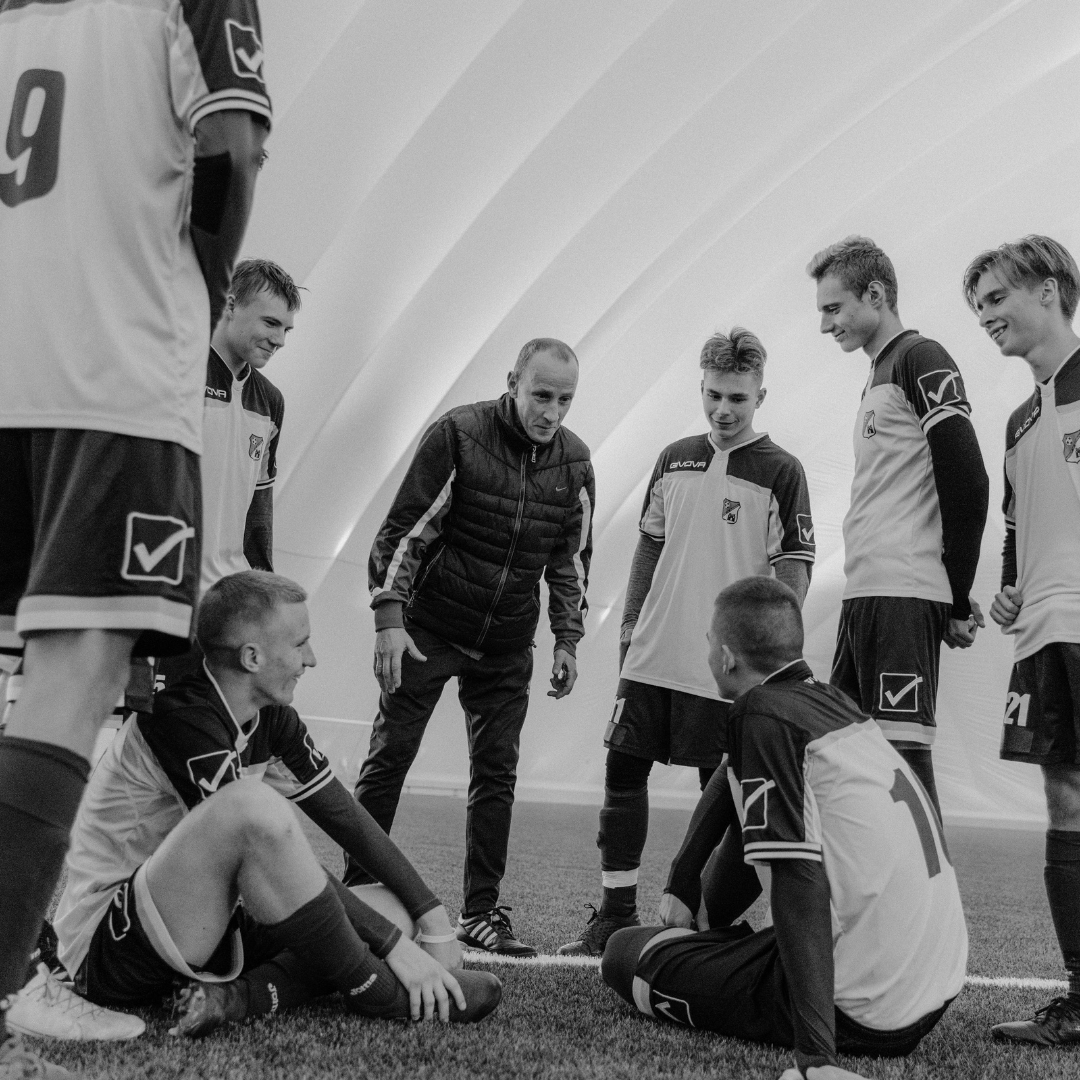
In college life, students not only study inside the classroom, but also build strong social relationships with classmates. One effective way to strengthen this bond is through team-based sports. Team-based sports, like football, basketball, and volleyball, not only lead to competition, but also teach the value of cooperation, communication, and solidarity among students.
A team-based sport requires each member to cooperate in the same goal, which is winning. In this context, students learn to communicate effectively, understand each other's roles, and support each other. For example, in a football team, every player has a certain role and responsibility. The team's success depends heavily on the ability of each individual to collaborate and coordinate well.
The experience of competing in team sports teaches students the importance of trust and responsibility. When students practice and play together, they learn to rely on each other, which eventually creates a stronger bond. It's very important to build solidarity, where each member of the team feels appreciated and has a common goal.
In addition to cooperation, team-based sports also teach students to develop empathy. When a member of the team is damaged or injured, his colleagues will feel and understand that feeling. In this situation, emotional support from friends becomes very important. Students learn to encourage each other, both on the field and off the field.
The emotional support awakened through this team-based sport is not only limited during competition. An intertwined relationship can extend to other aspects of everyday life, like helping friends in college tasks or giving support when facing personal problems. It creates a more exclusive and supportive social environment inside the campus.
Participants in sports competition also demand discipline and responsibility. Students involved in team-based sports usually have to follow the training schedule, respect the rules of the game, and maintain physical fitness. This discipline is not only useful in sports context, but it can also be applied in academic life.
By having a sense of responsibility towards the team, students learn to set their time and priority. It helps them become more organized in the face of academic and social demands on campus. When students experience mutual success, they also learn to appreciate the process and hard work necessary to achieve goals, which in turn increases the sense of solidarity between them.
Competition in team-based sports provides a valuable experience in solidarity. When students compete against other teams, they feel the same pressure and challenge. Facing the opponent together strengthens the sense of unity and makes each member of the team feel more bound. Winning through cooperation gives great satisfaction and increasing confidence, while defeat can be a valuable lesson that strengthens solidarity.
In competition, students learn to accept results, whether they win or lose, with a sporting attitude. It creates positive mentality that can be applied in many aspects of life. This skill is crucial in building solidarity within the campus, where students learn to support each other and respect each other, regardless of the outcome.
Team-based sports play an important role in increasing solidarity among students. Through cooperation, communication, empathy, and discipline, students not only build strong relationships with their colleagues, but also develop valuable social skills. By participating in sports competition, students can create a more supportive and exclusive environment, which will help them on their academic and social journey.
Source: Carron, A. V., & Hausenoblas, H. A. (1998). "The Role of Team Cohesion in the Perforance of Team Sports."